by urban-acupuncture | May 2, 2020 | Massage, Massage Therapy
What is a Myofascial Release Massage?
Myofascial release is a soft tissue therapy used to treat deep muscular tension, somatic dysfunction, and pain by relaxing the fascia (the fibrous bands around muscles, ligaments, and tendons). The technique requires very firm pressure that stretches and elongates deep muscle tissue, increasing range of motion and circulation.
Myofascial Release vs. Massage
 Massage involves stroking and kneading motions, usually administered with lubricants, making it easy for the therapist to slide their hands over the recipient’s skin. This is ideal for anyone with tension or tired muscles caused by exercise, sleeping in an odd position and just ordinary daily stresses. Massages usually last 30-60 minutes and can relieve muscle tension including the release of “knots” in the muscles. While people usually feel peaceful afterwards (although sometimes sore from the release of the muscle knots), it doesn’t typically address pain in the connective tissue.
Myofascial release applies sustained pressure on targeted areas of connective tissue (fascia) that surround your muscles and bones. This pressure is meant to release the restriction in the connective tissue so that you have greater range of motion and less pain. The physical therapist, who is trained in myofascial release, maintains pressure for three to five minutes at a time in the targeted area. Using steady pressure is the key. The fibers must be allowed sufficient time to soften and stretch. No lubricant is added to the skin so the therapist can locate and release the areas of connective tissue that are restricted.
Myofascial Release techniques have a wide range of potential benefits including (but not limited to):
- Corrects muscle imbalances
- Improves joint range of motion and overall flexibility
- Can help alleviate headaches or symptoms of migraines
- Reduced adhesion’s and scar tissue (from surgeries or injuries)
- Relieves muscle soreness and joint stress
- Promotion of healing are often part of the intent of the therapy including feeling more grounded and centered in your body; calms the nervous system
- Decreased overall effects of stress
- Better warm-ups for active individuals
- Increased blood flow and tissue hydration
- Myofascial Release therapy aims to address and support a variety of chronic pain conditions, and is usually repeated over several sessions for ongoing efficiency. Self-myofascial release techniques, such as with a foam roller may also be recommended which can be performed at home in order to help support the effects of the treatment.
How is myofascial release performed?
Myofascial release techniques (MFR) are designed to go in and smooth out those hard knots, returning the fascia to its normal fluid and adaptable self. In MFR, a gentle, sustained pressure is applied to points of restriction (those bunched up spots), allowing the connective tissue to release. Picture a stick of cold butter. If you jab your finger into it sharply, you’re just going to hurt your finger, and not even make a dent in the butter. But if you place your finger on the butter, and apply gentle pressure, you’ll find you’re able to slowly sink into the stick of butter, melting your way into it. This is essentially what is happening when an MFR therapist works on the body, or when one performs Self Myofascial Release (SMFR) with myofascial release tools such as rollers and balls.
Types of myofascial release
Myofascial release is typically categorized as either passive or active. Here is information on these two types and approaches to myofascial release:
1. Passive myofascial release: The passive form of myofascial release is where the therapist’s movements are guided by the patient’s body—the therapist is trained to find and identify tension in the patient’s fascia and observe how the patient’s body responds to treatment. This informs the therapist’s course of action, affecting where they stretch the patient’s fascia, how much pressure they apply, and for how long.
2. Active myofascial release: The active form of myofascial release involves the patient directed to contract and relax certain muscles under the guidance of the therapist.
A session may combine passive and active myofascial release techniques, or only use one approach.
By targeting specific areas of the fascial system, myofascial therapy can help prepare patients for more aggressive forms of strengthening, or provide pain relief for patients with restricted flexibility and movement, thus allowing patients to return to normal movement and greater function.
Contact Us For More Information
For more information about how acupuncture, massage therapy and other treatments can help you, please contact the Urban Acupuncture Center Board Certified Licensed Acupuncturist’s team at Indianola Ave, Clintonville (614) 725-2488 | Main St, Westerville (614) 426-4406 or click here. Taking new patients in and around greater Columbus, Ohio.
by urban-acupuncture | Apr 5, 2020 | Massage Therapy
What Is Deep Tissue Massage?
 Deep tissue massage is a hands-on massage technique designed to treat musculoskeletal concerns, such as muscle strains, sports-related injuries, and over-use injuries such as plantar fasciitis and tennis elbow. Unlike some massage techniques that focus on a light, gentle touch, deep tissue massage involves the application of firm and sustained pressure targeting the inner layers of muscles and connective tissues. Depending on each patient’s specific health concerns, deep tissue massage can be a full body massage, or it can be used to focus on one specific problem area. And while deep tissue massage can be emotionally relaxing as well as physically restorative, the slow and deep strokes needed to get deep into the muscles can, at times, get a bit uncomfortable!
What are the Benefits of Deep Tissue Massage?
Deep tissue massage offers a number of significant benefits, primarily (although not solely) focused on maintaining muscular health. While some massage techniques are intended primarily for relaxation, deep tissue massage is intended to address problem areas and facilitate healing. Some specific physical benefits of deep tissue massage include:
- Breaking up scar tissue following an injury
- Reducing tension held deep within the muscles
- Treating muscle pain
- Improving muscle soreness and stiffness
- Reducing inflammation
- Promoting faster healing through increased blood flow
However, while the primary target of deep tissue massage is physical healing, it can—and often does—also offer psychological benefits; most patients also experience significant stress reduction and increased relaxation after a deep tissue massage!
How is Deep Tissue Massage Different from Swedish Massage?
Both deep tissue massage and Swedish massage utilize slow and sustained pressure to relieve tension in the muscular-skeletal system. However, they differ quite a bit in terms of the level of pressure involved and the intended result.
Swedish massage is much gentler than deep tissue massage, involving less tension and pressure on the muscles. It utilizes less intense pressure because the goal of Swedish massage, generally speaking, is to promote relaxation and address muscle tension caused by everyday activities. Therefore, Swedish massage is usually a full-body massage targeting the superficial muscle groups that generally “hold tension”, such as the neck, shoulders, and back.
Deep tissue massage, on the other hand, also utilizes the palms and fingers to knead and manipulate the muscles and connective tissue, but may also involve use of the elbows and forearms to get at the deeper layers of muscle. It is this deeper penetration that enables deep tissue massage to target muscle and tendon injury, scar tissue, pain and stiffness, and sports-related injury.
Like Swedish massage, a deep tissue massage will start with lighter, gentler strokes to warm up the muscles and connective tissue. Once the muscles have warmed and loosened, your licensed massage therapist will begin to use a deeper kneading, stroking, and pushing, with varying amounts of pressure, to really target problem areas. Because of deep tissue massage targets the underlying musculature, it’s not uncommon for you to experience some lingering soreness for a few days after the massage; this soreness can usually be relieved with a heating pad or cold pack on the tender area.
While deep tissue massage is generally considered to be a safe and (mostly) risk-free treatment, it is not appropriate for everyone. It is not appropriate for pregnant women or for anyone with osteoporosis or a bone-related cancer, as the pressure involved in deep tissue massage may be enough to cause a fracture in weakened bones. Deep tissue massage may also not be recommended for individuals with a clotting disorder to history of blood clots or are taking blood thinners or have a clotting disorder. It is always recommended that you speak with your medical practitioner before undergoing a deep tissue massage.
Contact Us For More Information
For more information about how acupuncture, massage therapy and other treatments can help you, please contact the Urban Acupuncture Center Board Certified Licensed Acupuncturist’s team at Indianola Ave, Clintonville (614) 725-2488 | Main St, Westerville (614) 426-4406 or click here. Taking new patients in and around greater Columbus, Ohio.
by urban-acupuncture | Mar 10, 2020 | Massage Therapy
What is Swedish Massage Therapy?
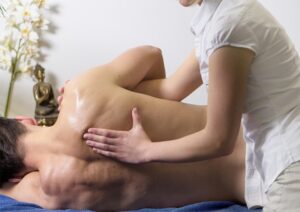 Swedish massage is the most well-known and most common type of massage therapy. The gentlest form of hands-on body work, Swedish massage therapy is designed to promote overall relaxation and well-being. Unlike deep tissue massage or myofascial release massage, Swedish therapy is a full-body massage technique that targets superficial muscle groups. During a Swedish massage, the massage therapist promotes muscle relaxation by rubbing the muscles in the same direction as blood returning to the heart. Techniques include long gliding strokes, circular pressure applied by the hands and palms, firm kneading, bending, and stretching.
As noted, Swedish massage therapy is a full-body massage technique in which the therapist will concentrate on each area of the body in turn. However, the massage therapist may concentrate on some areas more than others if he or she determines that some muscle groups are holding stress or require a firmer pressure to work out “knots”. For example, it is extremely common for individuals to “hold tension” in their shoulders and upper back, so it make take more time to fully relax those muscles. Every Swedish massage session is fully customized to meet the goals, and enhance the comfort, of each individual, and it is important to communicate with your massage therapist before and during your session.
Benefits of Swedish Massage Therapy
Generally speaking, the primary benefit of Swedish massage is relaxation! You should leave your massage session feeling loose, relaxed, and stress-free. But relaxation is not the only benefit of Swedish massage therapy. In fact, Swedish massage has a number of physical and emotional benefits that make it well-worth carving out some time in your busy schedule. For example, some additional benefits of Swedish massage therapy include:
- Increased blood flow. By stimulating the muscles with long strokes in the direction of blood flow to the heart, Swedish massage helps to open up blood vessels and improve blood flow around the body. In turn, this ensures that your muscles are getting more oxygen and nutrients and helps flush out harmful toxins more effectively.
- Improved muscle flexibility. By thoroughly relaxing the large muscle groupings, your body can experience a greater range of motion and improved flexibility. Especially when combined with a regular stretching routine, Swedish massage is a great way to minimize recovery time between workouts and prevent potential injury.
- Improving recovery time for muscle injuries. Most physicians will say that the best way to recover from a muscle-related injury is rest, relaxation, and avoiding activities that cause additional pain and discomfort. Swedish massage has help promote injury rehabilitation by kneading out adhesions and promoting muscle relaxation and flexibility.
- Pain management. Swedish massage can be an effective method of naturally managing chronic pain from sciatica, osteoarthritis, and other conditions. By communicating with your massage therapist about your specific pain points, he or she can target those areas for additional stroking and massaging for improved local circulation and enhanced muscle relaxation.
- Stress reduction. Stress reduction is likely the most well-known benefit of Swedish massage, because it really does work! Promoting muscle relaxation and improved circulation creates a physical response designed to counter your mental stresses by reducing the stress hormone cortisol. And by reducing your stress, you will find you feel better overall, with greater energy, fewer headaches, and better sleep, which in turn enables you to cope with stress better!
- Improved immune system. Reducing your levels of the stress hormone cortisol has an additional benefit as well: it actually strengths your immune system and promotes your body’s ability to self-heal, so you spend less time under the weather and more time enjoying life!
Is Swedish Massage Therapy for Me?
Swedish massage therapy is an excellent choice for anyone seeking to improve their well-being by reducing stress and enjoying a greater level of relaxation. Whether you have a specific goal or are simply looking for a way to feel a little more relaxed as you make your way in a busy, stressful world, Swedish massage is gentle and therapeutic, and a great way to make a little time just for yourself!
Contact Us
For more information about how acupuncture, massage therapy and other treatments can help you, please contact the Urban Acupuncture Center Board Certified Licensed Acupuncturist’s team at Indianola Ave, Clintonville (614) 725-2488 | Main St, Westerville (614) 426-4406 or click here. Taking new patients in and around greater Columbus, Ohio.
by urban-acupuncture | Feb 5, 2020 | Massage Therapy
Sports Massage
 Swimming, biking, yoga, weight lifting, Zumba or spin class, running, or even a walk outside: medical experts all agree that regular exercise is an important element of staying healthy! Yet regardless of how you choose to stay fit—competing in local road races, joining an adult sports team, or hitting the gym a few times a week—maintaining a regular exercise routine can easily be undermined by physical fatigue, soreness and pain, and even injury.
In fact, staying healthy and fit often requires more than just exercise: proper nutrition, active recovery, injury avoidance, and rest are all equally important. And incorporating sports massage therapy, along with good eating and sleep habits, into your exercise routine can help as well. Sports massage is an excellent way to minimize pain and discomfort from DOMS (delayed-onset muscle soreness), relax and rejuvenate overworked muscles, increase flexibility and mobility, reduce recovery times between workouts, and even prevent injury.
Sports Massage: What Is It?
Sports massage is a type of massage therapy designed to facilitate relaxing and rehabilitating recovery in those muscles and soft tissues that have been stressed by an active, athletic lifestyle. Depending on the needs of each unique patient, sports massage usually involves a variety of massage techniques and concentrates on specific muscle groups. And don’t let the word “relaxing” confuse you: sports massage is not designed to for full-body relaxation like other massage techniques: when performed properly, a sports massage can get a bit uncomfortable as it works out tightness, inelasticity, and lack of flexibility in active muscle groups!
Just as each patient is unique, each sports massage is just as unique. Based on his/her assessment of your specific massage requirements, your licensed massage therapist will develop a customized massage plan designed to target exactly those muscle groups and areas of soft tissue damage that require it. Your specific sports massage therapy may involve techniques such as:
- Trigger point massage: involves repeatedly manipulating trigger points (or knots) within muscles with patterns of isolated pressure and release
- Myofascial release: involves relaxing and stretching the fascia, or the connective tissue around the bones, muscles, and tendons
- Muscle energy: actively contracting the largest muscular groupings can stretch, relax, and strengthen tight, inflexible muscles
- Soft tissue release: passive, active, and/or weight-bearing techniques can stretch out and relax stiffness and tightness in the tendons, fascia, and muscle
Sports Massage: Benefits
In general terms, the biggest benefit of sports massage is enhanced athletic performance. More specifically, sports massage offers a number of benefits that, when taken together, add up to help you maintain your exercise routine and recover faster between workouts. Sports massage can:
- Help relieve muscle tension, discomfort, and pain
- Promote faster post-workout recovery time to decrease time between workouts
- Improve healing for existing injuries and prevent common overuse injuries
- Improve muscle elasticity flexibility, elasticity, and range of motion
- Improve blood flow for increased muscle growth and endurance performance
- Reduce blood pressure and heart rate
And the benefits of sports massage aren’t just physical! Studies have shown that sports massage can have added psychological benefits, including lowered anxiety, improved outlook and mood, and better quality of sleep. So to support your physical fitness, your mental health, and your health and overall well-being, schedule your sports massage today!
For more information about how acupuncture, massage therapy and other treatments can help you, please contact the Urban Acupuncture Center Board Certified Licensed Acupuncturist’s team at Indianola Ave, Clintonville (614) 725-2488 | Main St, Westerville (614) 426-4406 or click here. Taking new patients in and around greater Columbus, Ohio.
by urban-acupuncture | Jan 5, 2020 | Massage Therapy
Craniosacral Massage Therapy
 Also referred to as Cranial Sacral Therapy, or CST, Craniosacral Massage Therapy is a specific type of bodywork, or massage, designed to treat a variety of conditions by normalizing disruptions in the flow of cerebrospinal fluid, a critical element of the central nervous system.
In order to understand how Craniosacral Massage Therapy works, it’s important to understand the central nervous system, one of the body’s most critical systems. The central nervous system (CNS) is composed primarily of the head (the brain), the spinal column, the sacrum (the triangular bone located in the lower back), and the membranes and fluid that surround and protect it. Compression, distortions, and blockages within this critical fluid due to injury or stress can prevent the nervous system from functioning properly. Through gentle hands-on manipulation of the bones in the skull, spine, and pelvis, Craniosacral Massage Therapy can remove these blockages, restoring the normal flow of the central nervous system and enhancing the body’s ability to heal.
Craniosacral Massage Therapy is completely non-invasive and involves extremely gentle pressure, usually no more than 5 grams. That’s about the amount of pressure you would feel if a nickel were placed on your body; that’s how gentle Craniosacral Massage Therapy is. Yet just because it’s gentle, doesn’t mean it isn’t effective. In fact, CST has become a common therapeutic tool for massage therapists, physical therapists, osteopaths, and chiropractors. It can be performed as a stand-alone treatment, or incorporated into a comprehensive treatment plan utilizing a variety of techniques, depending on the specific needs of each patient.
What Does Craniosacral Massage Therapy Treat?
By relieving compression and blockages in the head, neck, and back (the core of the CNS), Craniosacral Massage Therapy can be a highly effective therapeutic technique to soothe pain and reduce (and potentially even eliminate) emotional and physical tension and stress.
It can also be incorporated into treatment for a variety of specific conditions such as:
- Concussion and traumatic brain injury
- Chronic and/or acute neck and/or back pain, such as whiplash
- Constipation and Irritable Bowel Syndrome (IBS)
- Insomnia and sleep disorders
- Fibromyalgia
- Temporomandibular joint disorder, or TMJ (inflammation of the joint connecting the lower jaw to the skull)
- Mood disorders such as anxiety and depression
- Difficult pregnancies
Craniosacral Massage Therapy may be appropriate for individuals of all ages, including infants and children. Every treatment is customized depending on the specific condition(s) and/or symptoms each patient is experiencing. Some patients may find relief after just a few sessions; other patients with more chronic conditions may require on-going treatment or the incorporation of CMT into a comprehensive treatment plan.
What Happens During a Craniosacral Massage Therapy Session?
Most Craniosacral Massage sessions last between 45-60 minutes and take place in a warm, comfortable, safe massage room. Patients are usually asked to wear loose, thin, comfortable clothing and lie on their back on a massage table. The gentle manual manipulation generally begins at the head and sacrum, allowing the therapy to identify areas of blockage for further gentle manipulation. Indeed, regardless of exactly why most people seek out Craniosacral Massage Therapy, most—if not all—patients find the therapy sessions deeply relaxing and restorative.
For more information about how acupuncture, massage therapy and other treatments can help you, please contact the Urban Acupuncture Center Board Certified Licensed Acupuncturist’s team at Indianola Ave, Clintonville (614) 725-2488 | Main St, Westerville (614) 426-4406 or click here. Taking new patients in and around greater Columbus, Ohio.
by urban-acupuncture | Dec 5, 2019 | Massage Therapy
Myofascial Release Massage
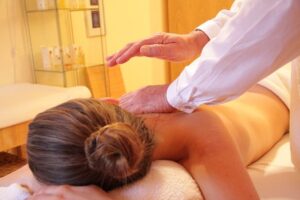 Myofascial Release, sometimes referred to as MFR for short, is massage technique that involves applying firm, steady pressure to areas of damaged fascia in order to break up adhesions and soften scar tissue. The goal of Myofascial Release Massage is to target areas of pain, discomfort, and soreness by reestablishing proper blood flow and nerve firing that have been blocked by damaged fascia. Although MFR is a type of massage, Swedish massage and other traditional massage techniques utilize repeating patterns of light pressure and “kneading” targeted at large muscle groups, while MFR involves focused pressure at the fascia by a thumb, hand, or elbow.
What is “Fascia”?
In order to understand what Myofascial Release Massage is, as well as the benefits of this technique, it’s important to have a basic understanding of what MFR is targeting: the fascia. The fascia is a complex, three-dimensional matrix woven throughout the body. It surrounds nearly every part of the human body, including our organs, muscles, nerves, and blood vessels, holding them in place and connecting them together. It is extremely strong, yet flexible and fluid, and highly adaptable.
When we are injured, our tissues are damaged, or our body experiences stress such as dehydration or inflammation, the body attempts to support and protect the surrounding tissues by contracting the nearby muscles. This extended contraction causes a build-up of toxins, restricts blood flow to the area, and causes the fascia to harden and tighten. And because the fascia is an interconnected web running throughout the body, tight and stiff fascia in one area of the body can cause ripples and bunching in the normally smooth, fluid fascia in other areas of the body.
Thus, the goal of Myofascial Release Massage is to identify areas where the fascia has become hard or blocked and, as the name implies, release that blockage. Once the fascia has been returned to its naturally fluid, flexible state, normal blood flow is restored, toxins are released, and the cycle of pain signals triggered by the original injury is interrupted. The ripples and bunches that the original block, or knot, created are smoothed out, reducing pain that the bunching created in other areas of the body.
What Does a Myofascial Release Massage Feel Like?
Myofascial Release Massage targets areas of blocked fascia through the use of gentle but sustained pressure. Once the massage therapist has located a “knot” or area of tight, stiff fascia, he or she will use his hand, thumb, or even elbow to apply gentle but sustained pressure on that knot until it is released. It may require applying pressure several times, moving to different sides of the knot until it has been totally released. In some cases, the pressure may be alternated with more traditional massage techniques targeting the nearby muscle groups to relieve muscle contractions as well.
Does it hurt? That’s a pretty common question! Myofascial Release Massage is a therapeutic technique focused on healing damaged tissues. It is not a massage technique designed to promote relaxation. The pressure required to unblock tight fascia should not be painful; however, it can be intense and sometimes uncomfortable, especially if the damage is extensive. Many patients do experience some level of muscular soreness for a day or two after a treatment; it’s very important to stay hydrated before and after the Massage to help combat this soreness.
For more information about how acupuncture, massage therapy and other treatments can help you, please contact the Urban Acupuncture Center Board Certified Licensed Acupuncturist’s team at Indianola Ave, Clintonville (614) 725-2488 | Main St, Westerville (614) 426-4406 or click here. Taking new patients in and around greater Columbus, Ohio.