
Key Takeaways
-
-
Targeting the Body’s Connective Web: Myofascial Release Therapy (MFR) focuses on relieving tension within the fascia—the tough, continuous web of connective tissue that surrounds every muscle, bone, organ, and nerve in your body.
-
Gentle, Sustained Pressure: Unlike deep tissue massage, traditional MFR uses sustained, low-load mechanical pressure to allow tight or dehydrated fascia to elongate and relax naturally.
-
Addresses Root Cause of Unexplained Pain: Fascial restrictions do not show up on standard X-rays or MRI scans, making MFR a key treatment for chronic, unexplained pain like fibromyalgia, myofascial pain syndrome, and posture-related stiffness.
-
Increases Mobility & Range of Motion: Releasing restricted fascia restores fluid sliding action between muscle layers, easing stiffness and improving joint flexibility.
-
Complements Acupuncture: Combining MFR with acupuncture at Urban Acupuncture Center enhances tissue hydration, breaks up chronic energy blockages (Qi stagnation), and offers comprehensive relief for body and mind.
-
What Is Myofascial Release Therapy (MFR)?
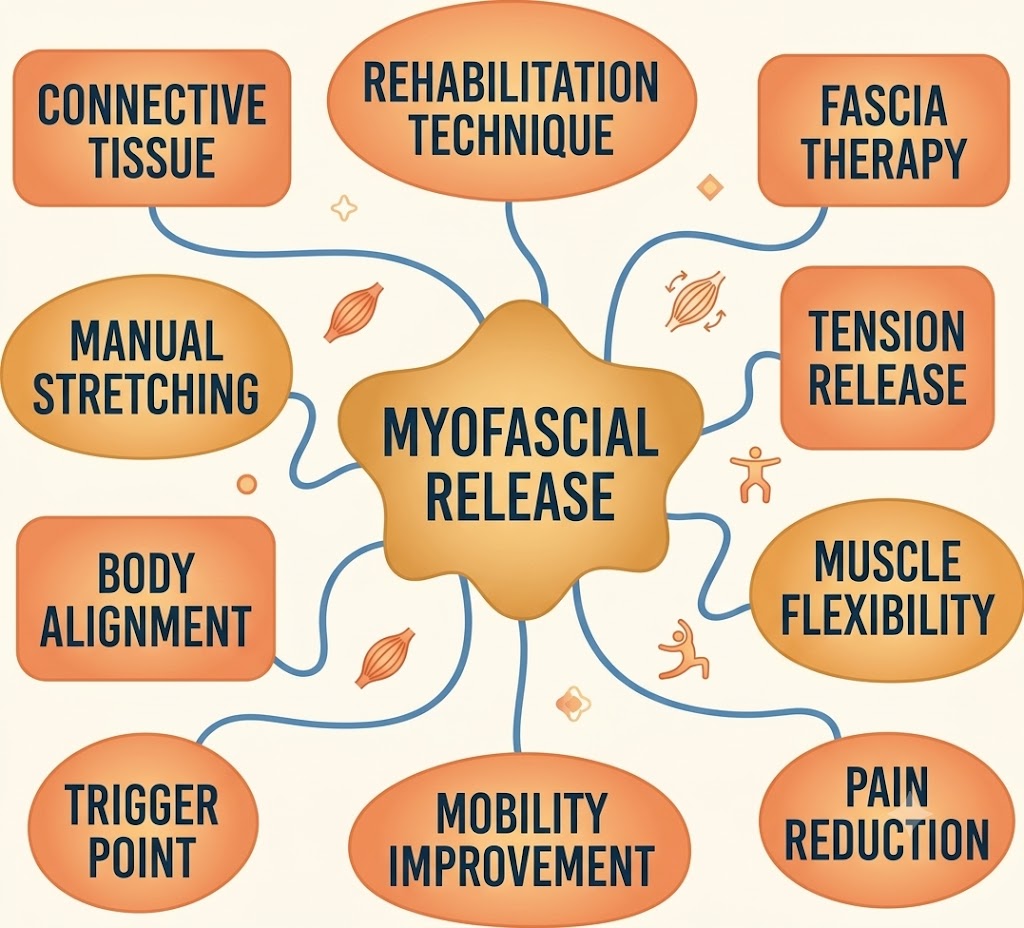 Myofascial Release (MFR) is a specialized hands-on physical therapy technique focused on diagnosing and treating restrictions in the myofascial complex (“myo” meaning muscle, and “fascia” meaning connective tissue).
Imagine wearing a tight, continuous body suit beneath your skin. If one corner of that suit gets twisted or knotted, it pulls across your entire frame, restricting your movement far away from the site of the original pull. That is how fascia works. When trauma, repetitive motion, poor posture, or inflammation occurs, fascia loses its elasticity, becomes rigid, and binds down on sensitive nerves and blood vessels.
What Is Fascia?
Fascia is a three-dimensional matrix of collagen and elastin fibers suspended in a fluid gel-like substance. Healthy fascia is soft, hydrated, and flexible, allowing your muscles and organs to slide smoothly over one another during movement. Under stress or injury, fascia dehydrates, hardens, and forms dense adhesions capable of producing up to 2,000 pounds per square inch of pressure on internal structures.
How Does Myofascial Release Work?
Unlike classic massage therapy—which uses glides, kneads, or rapid strokes over muscle bellies—hands-on Myofascial Release is a slow, methodical process.
- Palpation & Identification: The practitioner uses light to moderate pressure to feel for areas where the fascia feels dense, rigid, or immobile.
- Sustained Pressure & Stretch: The therapist applies broad, directional pressure into the restricted fascial plane, holding the stretch for 3 to 5 minutes per area.
- Piezoelectric Effect & Thixotropy: Holding pressure generates a microscopic electrical charge (piezoelectric effect) and heat within the tissue. This process changes the consistency of fascia from a solid, gelled state into a fluid, pliable state (a phenomenon known as thixotropy).
- Rehydration: As the fascia unwinds and softens, ground substance fluid rushes back into the tissue, restoring smooth sliding action between muscle fibers and releasing trapped nerve endings.
Health Benefits of Myofascial Release
Because fascia encloses the entire body from head to toe, fascial restrictions can produce symptoms in surprisingly varied areas. MFR is particularly effective for:
| Condition | How Myofascial Release Helps |
| Myofascial Pain Syndrome | Direct release of dense, painful fascial adhesions reduces localized and referred muscle aches. |
| Chronic Lower Back & Neck Pain | Softens tight lumbar and thoracolumbar fascia, taking pressure off spinal discs and nerve roots. |
| Fibromyalgia | Gentle, sustained pressure relaxes hyper-reactive pain pathways across broad fascial sheets without triggering muscle guarding. |
| Plantar Fasciitis | Relieves tension along the plantar fascia under the foot and the connected posterior chain (calves and hamstrings). |
| Post-Surgical or Scar Tissue Pain | Unwinds tight scar tissue and adhesions from prior surgeries or injuries, improving mobility and reducing pull on surrounding tissue. |
Integrating Myofascial Release with Acupuncture
At Urban Acupuncture Center, we integrate structural bodywork with acupuncture to address both physical and energetic health.
-
The Fascial-Meridian Connection: Modern bio-anatomical research shows that Traditional Chinese Medicine meridian lines (channels through which Qi flows) correspond closely to anatomical fascial planes (such as the superficial back line).
-
Synergistic Healing: Inserting acupuncture needles into specific points stimulates local fascial winding, signaling the brain to release natural pain-relieving endorphins. Following or pairing this with MFR manually stretches and hydratically resets the tissue network.
-
Long-Term Structural Balance: Releasing fascial tightness helps keep your body aligned after acupuncture treatments, extending the benefits of your session.
Self-Myofascial Release (SMFR) at Home
In addition to professional hands-on care, you can maintain fascial health at home using Self-Myofascial Release (SMFR) tools like foam rollers, massage balls, or peanut rollers.
Tips for Safe Home Release:
-
Go Slowly: Roll over muscle groups slowly until you find a tight or tender spot.
-
Pause and Hold: Instead of rapidly rolling back and forth, pause directly on the tender spot for 30 to 60 seconds, breathing deeply until you feel the tension ease.
-
Stay Hydrated: Drink plenty of water before and after self-release to support tissue rehydration.
What to Expect During a Clinical MFR Session
- Structural Assessment: Your therapist evaluates your posture, gait, and mobility to pinpoint restricted fascial chains.
- Dry Touch Technique: Clinical MFR is often performed without oils or lotions so the practitioner’s hands can accurately engage and stretch the skin and fascial layers without slipping.
- Gentle, Deep Sensation: You will feel a slow, firm stretching sensation. It should feel relieving rather than sharp or painful.
- Post-Session Integration: Afterward, you may feel taller, lighter, or more relaxed. Drinking extra water following your appointment helps flush out metabolic waste and supports optimal fascial rehydration.
Frequently Asked Questions (FAQs)
How is Myofascial Release different from deep tissue massage?
Deep tissue massage uses heavy, repetitive pressure to work across muscle fibers directly. Myofascial Release uses low-load, sustained pressure held over several minutes to allow the protective fascial matrix to elongate without triggering the body’s defensive muscle guarding response.
Why doesn’t fascial pain show up on X-rays or MRIs?
Standard imaging technology (X-rays, CT scans, MRIs) visualizes hard structures like bones or soft tissues like muscle bellies and organs, but it cannot readily capture microscopic fascial density or fluid restrictions. MFR relies on skilled manual palpation to identify these hidden areas.
Is Myofascial Release safe for everyone?
MFR is extremely safe for most people. However, it is contraindicated over open wounds, acute fractures, active deep vein thrombosis (DVT), severe osteoporosis, or areas of active malignancy. Always share your complete medical background during your intake.
How many sessions are recommended?
While many clients feel noticeable physical lightness after a single session, chronic fascial tightness built up over years typically responds best to a series of 4 to 8 sessions, especially when combined with supportive acupuncture care.
Experience Relief at Urban Acupuncture Center
If you’re dealing with stubborn muscle tightness, chronic pain, or limited flexibility, addressing your fascia could be the missing piece in your recovery.
To learn more about our holistic bodywork services or to book a session with our integrative health team, visit Urban Acupuncture Center.
Contact Urban Acupuncture Center in Columbus, OH For More Information
For more information about how acupuncture, massage therapy, electroacupuncture and other alternative healing treatments can help you, please contact the Urban Acupuncture Center Board Certified Licensed Acupuncturist’s team at Indianola Ave, Columbus, Ohio (Clintonville) (614) 725-2488 or click here. Taking new patients in and around greater Columbus, Ohio.
Voted Best of Columbus Two Years in a Row!
References
- Mayo Clinic: Myofascial Release Therapy: What Is It and How Does It Work? Available at: https://www.mayoclinic.org/diseases-conditions/back-pain/expert-answers/myofascial-release/faq-20058136
- Cleveland Clinic: Myofascial Pain Syndrome & Release Techniques. Available at: https://my.clevelandclinic.org/health/diseases/12054-myofascial-pain-syndrome
- Journal of Bodywork and Movement Therapies: The Role of Fascia in Chronic Musculoskeletal Pain. ScienceDirect: https://www.sciencedirect.com/journal/journal-of-bodywork-and-movement-therapies