Key Takeaways
-
-
Targeted Soft-Tissue Technique: Neuromuscular Therapy (NMT) is a specialized form of manual physical therapy that addresses the underlying causes of chronic muscle pain and postural imbalance.
-
Focus on Trigger Points: NMT primary targets hyper-irritable spots within tight muscle bands—known as trigger points—that often send referred pain to other regions of the body.
-
Restores Balance: By addressing ischemia (restricted blood flow), nerve compression, postural distortion, and biomechanical dysfunction, NMT resets normal communication between the nervous system and muscles.
-
Effective for Chronic Conditions: Highly beneficial for sciatica, lower back pain, neck strain, rotator cuff issues, tension headaches, and carpal tunnel syndrome.
-
Synergistic Care: At Urban Acupuncture Center, NMT integrates seamlessly with acupuncture to accelerate tissue healing, relieve stubborn spasms, and promote long-term postural wellness.
-
What Is Neuromuscular Therapy (NMT)?
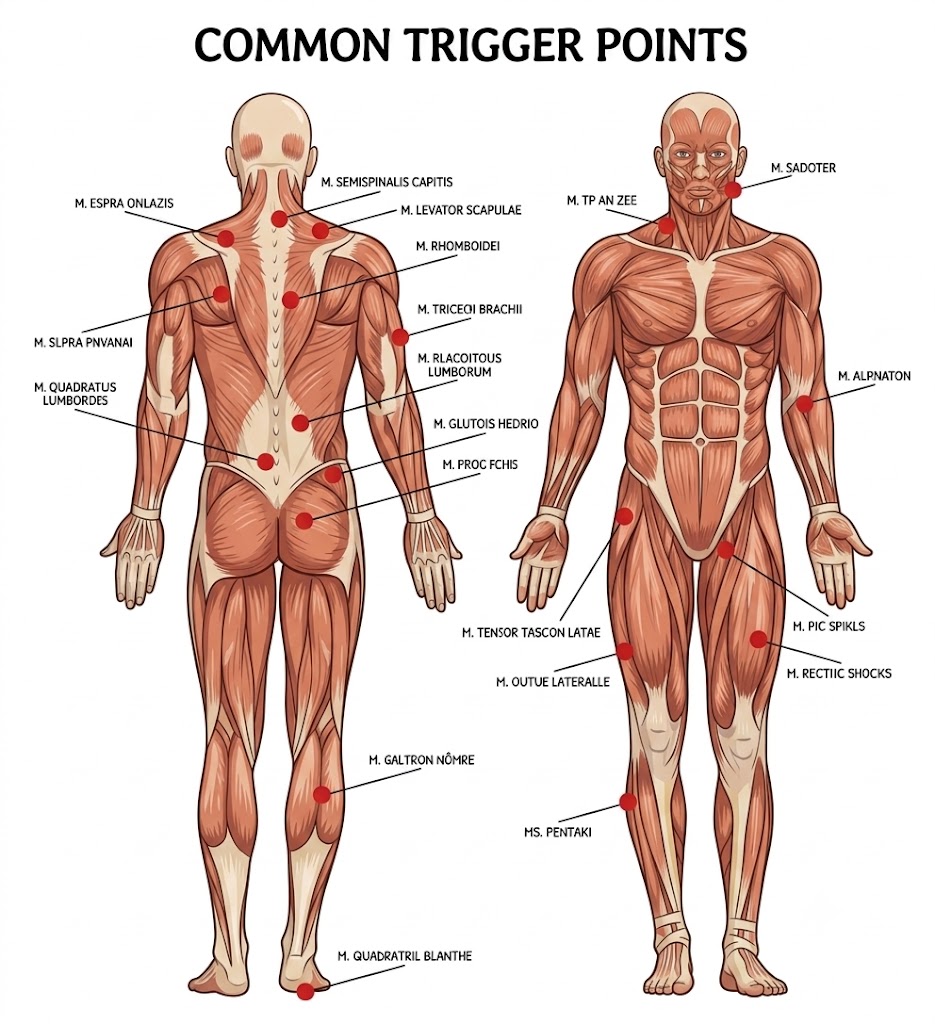 Neuromuscular Therapy (NMT), often referred to as Neuromuscular Massage, is an advanced system of precise soft-tissue manipulation. Unlike general relaxation massage, NMT is a clinical, targeted modality designed to assess, treat, and prevent soft-tissue injuries and chronic pain.
The human body relies on a constant, dynamic loop between the nervous system (the control network) and the muscular system (the movement engine). When an injury, repetitive stress, or poor posture disrupts this communication, muscles can contract into painful knots that refuse to release on their own. NMT works specifically at this intersection—the neuromuscular junction—to restore natural function.
The 5 Causes of Neuromuscular Pain
Neuromuscular therapy is built around identifying and correcting five main structural and physiological imbalances:
- Ischemia: A localized lack of blood flow to soft tissues. When a muscle is constantly contracted, blood vessels are compressed, depriving tissue of oxygen and nutrients while allowing metabolic waste (like lactic acid) to build up.
- Trigger Points: Hyper-irritable nodules in a taut band of muscle tissue. Trigger points irritate nearby nerves and frequently cause referred pain—pain felt in a completely different area of the body than where the knot actually sits.
- Nerve Compression or Entrapment: Pressure placed on a nerve by surrounding bones, ligaments, or tight muscles (e.g., piriformis muscle compressing the sciatic nerve).
- Postural Distortion: Imbalances in the musculoskeletal system that pull the body out of vertical and horizontal alignment, forcing compensating muscles to overwork.
- Biomechanical Dysfunction: Inefficient movement patterns caused by repetitive strain, poor ergonomics, or past unhealed injuries.
How Does Neuromuscular Therapy Work?
During an NMT treatment, the therapist uses specialized pressure—typically applying fingers, thumbs, or elbows—to target soft-tissue restrictions.
-
Ischemic Compression: The practitioner applies static, measured pressure directly to a trigger point for 10 to 30 seconds. This temporarily reduces blood flow to the knot.
-
Rebound Hyperemia: When the pressure is released, fresh, oxygenated blood floods the tissue, flushing out trapped cellular waste and relaxing the muscle fibers.
-
Nerve Decompression: Softening hypertonic (overly tight) muscles relieves physical pressure on neighboring peripheral nerves, resolving sensations like numbness, tingling, or burning.
Health Benefits of Neuromuscular Therapy
Because NMT addresses the root physical mechanisms behind muscle spasms and nerve irritation, it offers significant relief for a wide range of chronic pain conditions:
| Condition | How Neuromuscular Therapy Helps |
| Sciatica & Piriformis Syndrome | Releases tightness in the deep gluteal muscles to stop nerve entrapment along the sciatic pathway. |
| Chronic Neck & Shoulder Strain | Releases trigger points in the trapezius and levator scapulae muscles, restoring normal cervical range of motion. |
| Lower Back Pain | Balances muscle tension between the quadratus lumborum, iliopsoas, and gluteal group to stabilize the lumbar spine. |
| Tension Headaches & TMJ | Relieves muscular knots in the suboccipital muscles at the base of the skull, temporalis, and masseter muscles. |
| Carpal Tunnel Symptoms | Decompresses tight forearm flexors and shoulder girdle muscles that mimic or aggravate median nerve entrapment. |
Combining Neuromuscular Therapy with Acupuncture
At Urban Acupuncture Center, we believe in an integrative approach that treats both structural and energetic body mechanics. Pairing Neuromuscular Therapy with acupuncture offers unique advantages:
-
Trigger Points vs. Ah Shi Points: In Traditional Chinese Medicine (TCM), localized tender spots created by blocked Qi and Blood are called Ah Shi points. Modern medical science recognizes that these Ah Shi points correspond closely to clinical trigger points.
-
Deeper Neurological Reset: Acupuncture needles work directly on nerve endings and brain signaling to reduce systemic inflammation and trigger natural endorphin release. NMT physically manipulates the surrounding fascial layers to ensure the muscle remains relaxed post-treatment.
-
Long-Term Structural Correction: Combining physical tissue release with acupuncture prevents pain patterns from recurring, helping your body maintain healthy posture and alignment over time.
What to Expect During an NMT Session
- Postural & Structural Assessment: Your practitioner evaluates your posture, range of motion, and pain history to pinpoint the primary source of tissue strain.
- Targeted Hands-On Work: Using precise friction and static pressure, the therapist treats active trigger points. Communication is key: you will be asked to rate sensation on a scale from 1 to 10 to keep pressure within a therapeutic, comfortable threshold.
- Stretching & Re-education: Once tissues soften, gentle passive stretching is applied to re-establish healthy muscle length.
- Self-Care Recommendations: Your therapist may recommend specific stretches, hydration strategies, or ergonomic adjustments to maintain your progress between visits.
Frequently Asked Questions (FAQs)
Is Neuromuscular Therapy painful?
NMT involves deep, targeted pressure on sensitive trigger points, which can produce a sensation often described as “good pain” or intense pressure. However, it should never feel sharp, overwhelming, or intolerable. Your therapist continually checks in to ensure pressure stays within your comfort zone.
How is NMT different from Deep Tissue Massage?
While deep tissue massage applies heavy pressure across broad muscle groups to relax general tension, NMT is a precise, diagnostic protocol. NMT systematically evaluates tissue texture, trigger point location, nerve entrapment, and posture to treat specific pain complaints.
How many sessions will I need to see results?
Many individuals experience reduced pain and increased mobility after just 1 or 2 sessions. For chronic conditions or long-standing postural distortions, a series of 4 to 6 sessions is usually recommended for lasting structural realignment.
Can NMT help with old or recurring injuries?
Yes. Chronic injuries often leave behind fibrotic scar tissue and entrenched trigger points that keep muscles in a defensive state. NMT helps break down adhesions, improves local circulation, and retrains the nervous system to let go of long-held muscle tension.
Experience Neuromuscular Relief at Urban Acupuncture Center
Persistent muscle knots and nerve pain don’t have to dictate your daily life. Whether you are recovering from an injury, managing workplace postural strain, or dealing with chronic pain, Neuromuscular Therapy offers an evidence-backed path toward lasting mobility and comfort.
To learn more about our integrative services or to schedule an appointment with our team, visit Urban Acupuncture Center.
Contact Urban Acupuncture Center in Columbus, OH For More Information
For more information about how acupuncture, massage therapy, electroacupuncture and other alternative healing treatments can help you, please contact the Urban Acupuncture Center Board Certified Licensed Acupuncturist’s team at Indianola Ave, Columbus, Ohio (Clintonville) (614) 725-2488 or click here. Taking new patients in and around greater Columbus, Ohio.
Voted Best of Columbus Two Years in a Row!
References
-
- National Center for Biotechnology Information (NCBI): Myofascial Trigger Points: Pathophysiology and Evidence-Based Diagnosis. Available at: https://pmc.ncbi.nlm.nih.gov/search/?term=Myofascial+Trigger+Points%3A+Pathophysiology+and+Evidence-Based+Diagnosis (Comprehensive medical overview of trigger point physiology).
- American Massage Therapy Association (AMTA): Understanding Neuromuscular Therapy. Available at: https://www.amtamassage.org/search/?k=Understanding+Neuromuscular+Therapy&page=1https://www.amtamassage.org/
- Cleveland Clinic: Myofascial Pain Syndrome: Symptoms, Causes & Treatment. Available at: https://my.clevelandclinic.org/health/diseases/12054-myofascial-pain-syndrome